Persistent Pain Resources
It's time to look beyond medical labels and the "find it, fix it" mentality of traditional care.
At Thrive, we focus on uncovering the root contributors to your symptoms and use innovative strategies grounded in the latest research and technology. When you understand what’s really happening in your body, fear fades and confidence grows—empowering you to take meaningful steps toward healing.
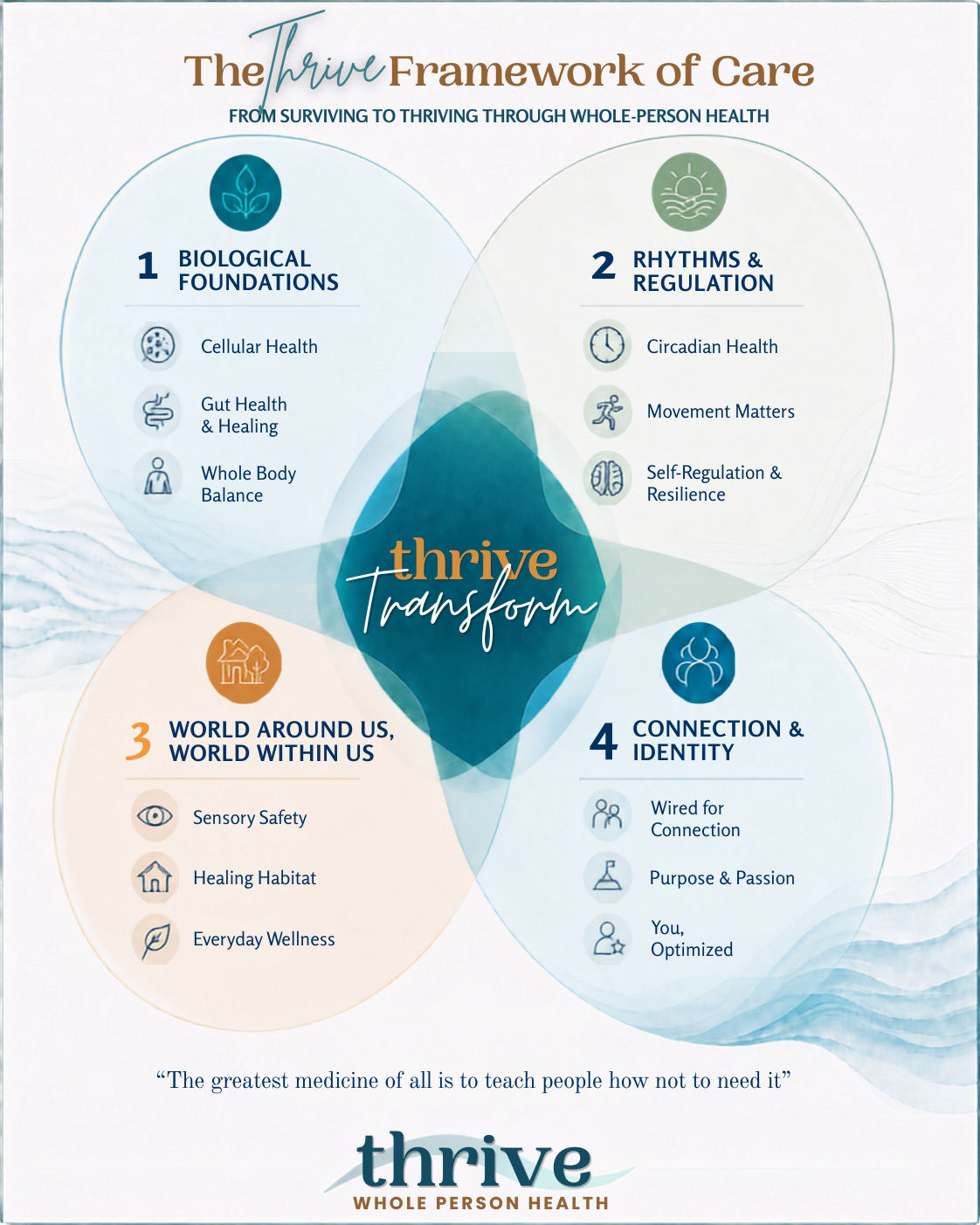
The Thrive TRANSFORM Framework of Care
Health is more than the absence of disease. Complex symptoms often ask us to look beyond a single diagnosis or body system.
To understand what may help a young person feel and function better, we need a broader lens: one that considers the interconnected contributors influencing their health, the factors that may be keeping symptoms going, and the foundations that help a person heal, adapt, and thrive.
The Thrive TRANSFORM Framework of Care brings that whole-person perspective into one comprehensive model. Across four interconnected dimensions and twelve facets, we explore areas ranging from biology, gut health, sleep and movement to nervous system regulation, sensory experience, environment, daily life, relationships, identity, and purpose.
Not every facet will need the same attention. The goal is to understand the whole picture well enough to recognize what matters most for this person, right now—and build a thoughtful, personalized path forward.
Because when we broaden the way we understand health, we also broaden the possibilities for supporting it.
More whole. More personal. More hopeful.
Books
Below, you’ll find a collection of my favorite resources to help you gain insight, build resilience, and create lasting change.
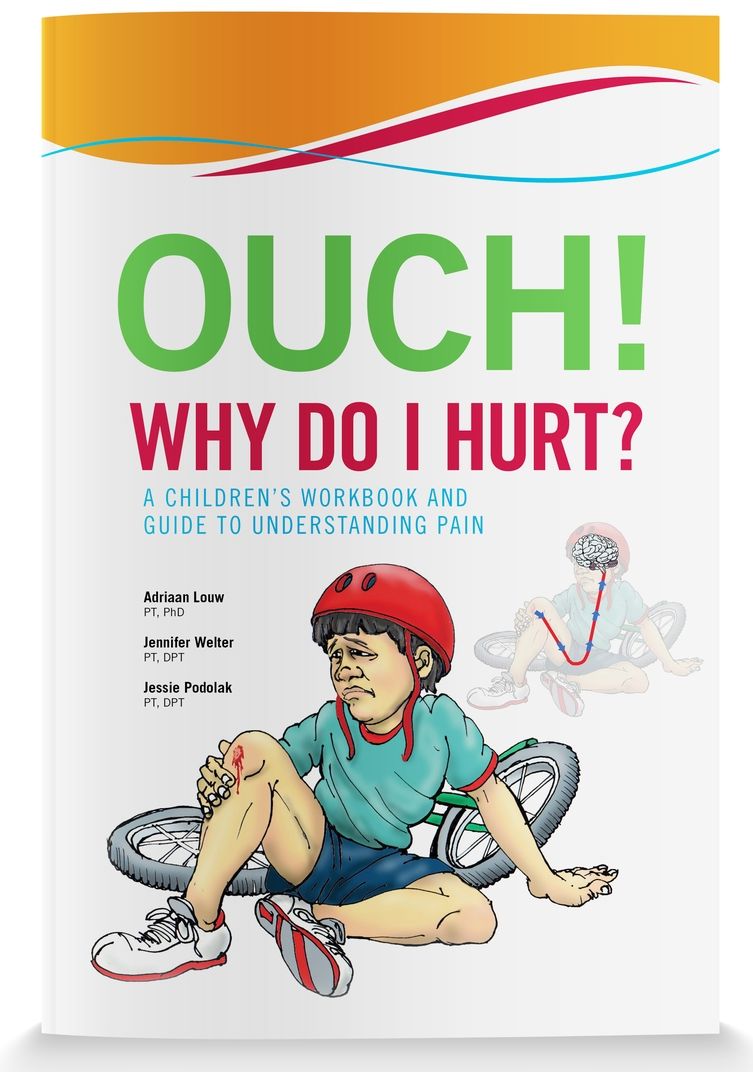
Ouch! Why Do I Hurt?
by: Jennifer Welter, Adriaan Louw, Jessie Podolak
This workbook and guide provides a fun, interactive way to teach kids about how pain works and what to do about it.
Studies show that when kids understand how pain works, they fear it less and are more able to return to school and the activities they enjoy—which can help them start feeling better. This workbook and guide includes stories, metaphors, colorful illustrations and activities to help teach kids about the body’s amazing protective system–the nervous system.
Kids will learn how pain works and healthy ways to manage pain when they experience it. Writing, drawing and coloring activities help kids discover steps they can take to start feeling better, while also improving comprehension of the information in the book.
For kids currently experiencing pain, this book can help ease fears and help them start to feel better. For all other children, this interactive guide prepares them to cope with future pain experiences in a healthy and positive way. A valuable tool for kids, the adults in their lives and the healthcare providers entrusted with their care, this book makes learning about pain fun.
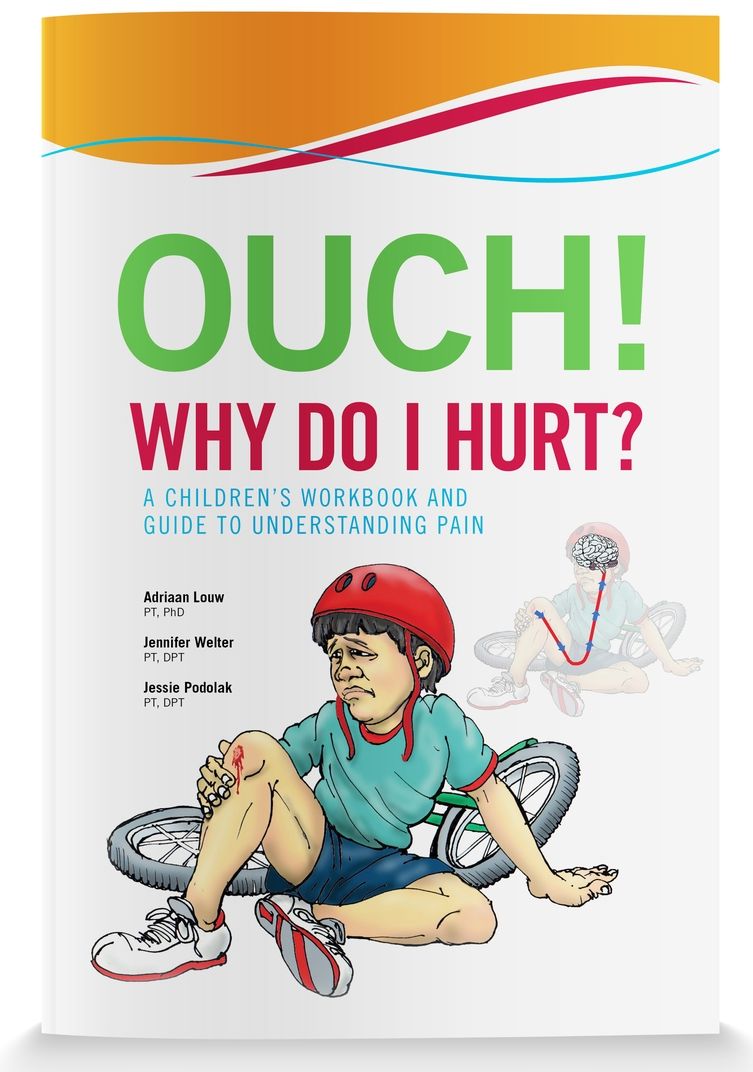
Ouch! Why Do I Hurt?
by: Jennifer Welter, Adriaan Louw, Jessie Podolak
This workbook and guide provides a fun, interactive way to teach kids about how pain works and what to do about it.
Your Headache Isn't All In Your Head
by: Adriaan Louw, Ina Diener
Learn how headache pain really works, how the brain and nervous system contribute to headaches, and how to alleviate and prevent future headaches.
Smart Brain Pain Syndrome
by: Georgia Weston, Lonnie Zeltzer, Paul Zeltzer
A new approach to chronic pain in children and young adults. The solutions are not typical medical prescriptions and therapies, but instead are a wide variety of creative outlets that soothe and retrain the brain, providing relief.
Online Resources